
Systems Thinking for Energy Transition
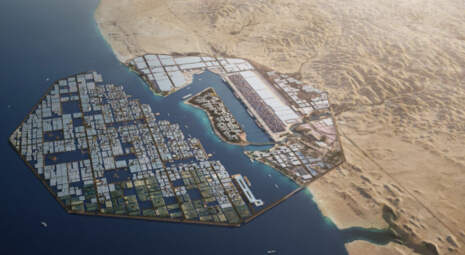
Neom is a ‘gigaproject’ in Saudi Arabia. To call it a ‘project’ is a bit of an understatement. It’s more of a vision or a dream that you might read about in a science fiction book. But it’s happening, right now. Neom is a new city region designed by Crown Prince Mohammed bin Salman for US$500bn in the northwest of the country on the Red Sea.
It’s a transformative net-zero and clean energy vision of the future, which will be run by robots and AI. Neom claims to be a “blueprint for tomorrow in which humanity progresses without compromise to the health of the plant”. Look it up – as an engineer, it will blow your mind.
What came first for this gigaproject was the vision. A vision for Saudi Arabia in a post-oil world.
Saudi Vision 2030 is a strategic framework to reduce the country’s dependence on oil, diversify its economy and develop public service sectors. The vision has three main pillars:
- to make the country the “heart of the Arab and Islamic worlds”,
- to become a global investment powerhouse, and
- to transform the country’s location into a hub connecting Afro-Eurasia
Did you notice that there’s no mention in this vision of anything being constructed? It’s a challenge put out for engineers and technology developers to be creative, innovative and resourceful to deliver this vision.
For example, just a small part of this vision is a plan to build a 7km-wide eight-sided floating port city called Oxagon that will be home to the world’s first fully automated port and integrated logistics hub. In itself, this floating port city is a complex project, but when you then consider this alongside Neom City and Saudi Vision 2030, you can imagine that all of that complexity multiplies!
Oxagon
So, if you are the Project Director for Oxagon, what is your mission? Who are your stakeholders? What are your objectives? And how do you motivate your team to innovate and deliver such a challenging project? What might your mission statement look like?
“To build an eight-sided port city by 2030, within budget and to world-class safety standards.”
Or is it more like
“To create the world’s largest floating, net-zero, smart hub connecting Afro-Eurasia.”
Which statement would inspire your team? Which one communicates that bigger picture and encourages everyone involved to reach out to the widest possible stakeholder group to lean on when things get challenging? Which they will!

Most of the projects we work on are part of a bigger picture and we ignore that at our peril. There’s no doubt that Neom is one of the most complex megaprojects that the world has ever seen.
If you tried to tackle something of this scale using conventional project management methods, you would quickly reach meltdown! Systems thinking is one way of making sense of the complexity by looking at it in terms of wholes and relationships rather than by splitting it down into its parts. Energy transition projects, even ones not quite on the scale of Neom, are usually complex projects and need to be ‘managed’ in such a holistic way – and systems thinking gives us some ideas and tools on how to do this.
Energy Transition Leadership
With the drive towards Net Zero gathering pace, the need to develop requisite leadership skills for this energy transition environment has never been greater. The challenges that arise out of projects with “first of its kind” (FOIK) emerging technologies, in new markets, and with unfamiliar contracting arrangements require changes of mindset and, consequently, a greater emphasis on leadership at every level of the project organisation.
Starting September, our Energy Transition Leadership Workshop Series aims to address the key areas to be considered and managed in order to execute profitable projects for contractors and present viable capital investments for owners.
Learn more and register your place at our upcoming Energy Transition Leadership Program here
Guest Blog by Karen Smith – Kingsfield Academy Associate